Cannabis curing is the process of holding initially dried cannabis flower buds in a controlled environment for a period, during which internal chemical changes take place, moisture redistributes evenly, and the final quality of the product improves.
This article explains why curing matters and how resealable bags and two-way humidity-control packs are used in the process.
🌿 Understanding Cannabis Curing
Cannabis curing is much like the aging of tea, wine, or cigars. Harvested and initially dried buds still hold moisture unevenly and carry residues such as chlorophyll, which can give them a harsh, grassy character. Curing serves three key purposes:
Enhancing Aroma and Flavor: In a sealed environment held at the right temperature and humidity, residual chlorophyll gradually breaks down, softening those grassy notes. At the same time, cannabinoids and terpenes—the latter being the main source of aroma and flavor—continue to interact and evolve, producing a smoother, richer, and more layered flavor profile.
Preserving Chemical Stability: Curing helps preserve the flower's primary compounds, including cannabidiol (CBD), and limits their degradation over time. For industrial hemp, defined as cannabis containing less than 0.3% THC (tetrahydrocannabinol), such stability is critical to both product quality and regulatory compliance.
Balancing Moisture Distribution: After initial drying, the surface of a bud may feel dry while its inner stems and core still hold moisture. Curing lets that moisture migrate slowly outward until levels even out across the whole bud. This reduces the risk of mold in damp pockets and prevents the quality loss that comes from over-drying.
🛠️ Tools for Curing: Resealable Bags and Humidity Packs
In small-scale or home curing, resealable zip-top bags (often called ziplock bags) are commonly paired with two-way humidity-control packs to create and maintain a stable microenvironment.
1. The Role and Use of Resealable Bags
Here, the bag serves as a sealable enclosure that creates a miniature curing environment. Its core functions are:
- Maintaining Humidity: Sealing initially dried buds inside the bag slows moisture loss, so they cure at a steadier humidity instead of drying out too quickly.
- Isolation from the Outside Environment: The bag shields the buds from contamination and from humidity swings caused by repeated exposure to outside air.
Key Handling Points:
- Sealing and Burping: Place the buds in the bag, press out most of the air, and seal it to lower the oxygen level inside. Do not leave the bag sealed indefinitely, though: open it for a few minutes once a day or every other day to let fresh air in. This "burping" releases accumulated gases (such as ethylene), lets oxygen back in, and reduces the risk of anaerobic microbial growth.
- Single Use Recommended: To avoid cross-contamination from lingering mold spores, treat each bag as single-use. If you do reuse one, clean and disinfect it thoroughly first.
2. The Role and Use of Humidity Packs
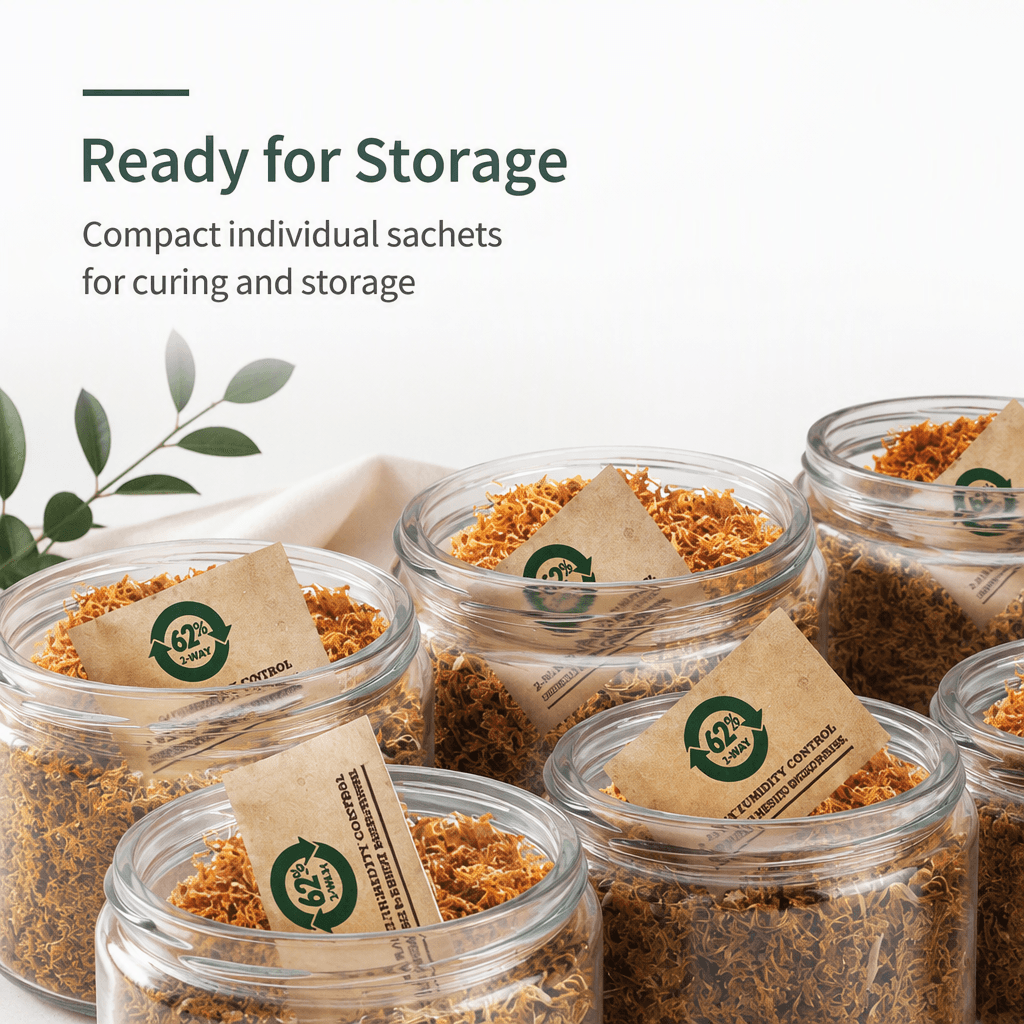
Humidity packs—typically two-way humidity-control packs containing a saturated salt solution, such as those from HUAWIN Technology—function as passive humidity regulators. They are essential to a successful cure because they hold the microenvironment within a narrow target range, typically 55–62% relative humidity (RH), by absorbing or releasing moisture as needed.
Used together, the bag keeps that environment contained while the pack keeps it in range.